
Publications
Total publications: 12
Cite INHERENT:
Kountouris P, Stephanou C, Archer N, Bonifazi F, Giannuzzi V, Kuo KHM, Maggio A, Makani J, Mañú-Pereira MDM, Michailidou K, Nkya S, Nnodu OE, Trompeter S, Tshilolo L, Wonkam A, Zilfalil BA, Inusa BPD, Kleanthous M; on behalf of the International Hemoglobinopathy Research Network (INHERENT). The International Hemoglobinopathy Research Network (INHERENT): An international initiative to study the role of genetic modifiers in hemoglobinopathies. Am J Hematol. 2021 Nov 1;96(11):E416-E420. doi: 10.1002/ajh.26323. Epub 2021 Aug 30. PMID: 34406671
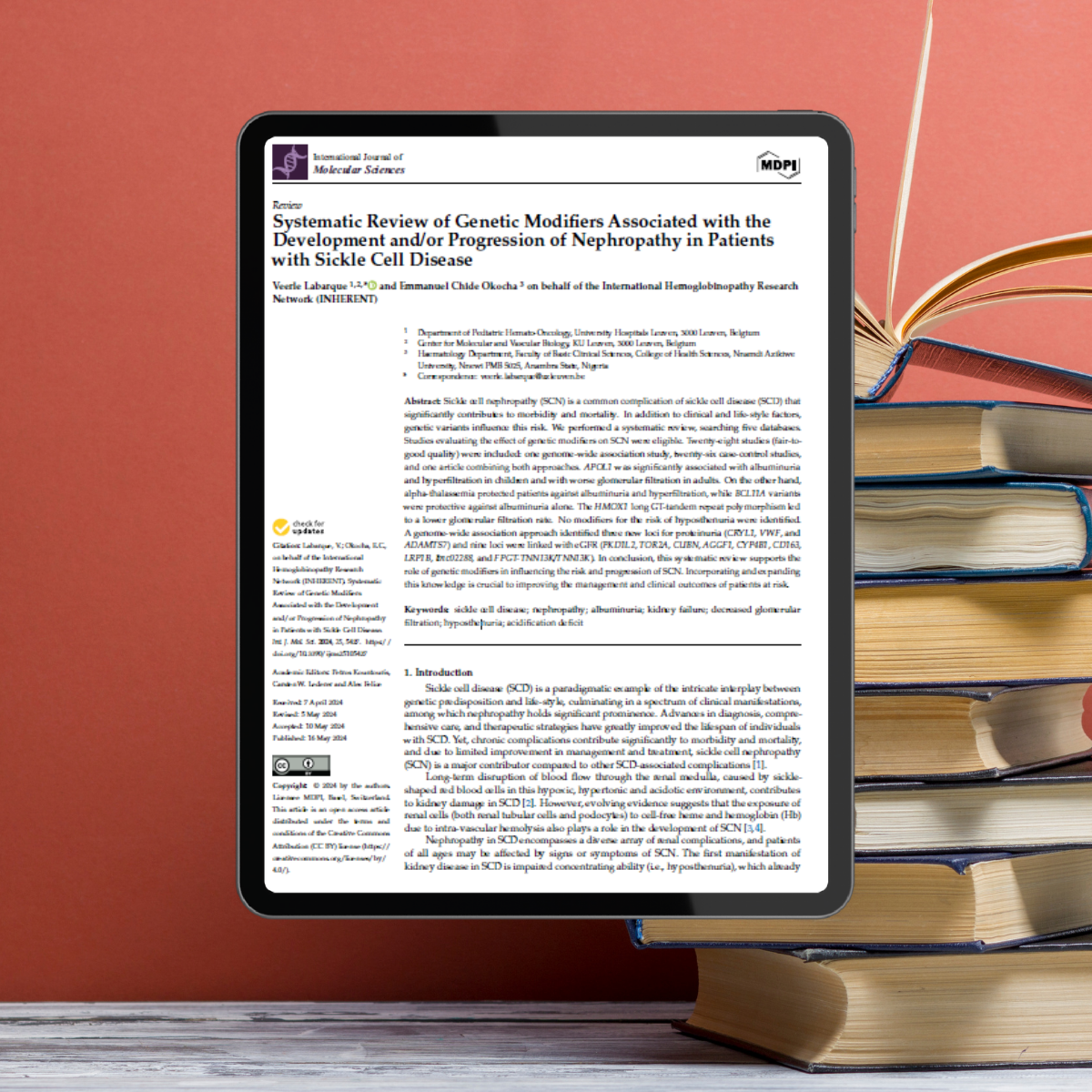
Systematic Review of Genetic Modifiers Associated with the Development and/or Progression of Nephropathy in Patients with Sickle Cell Disease.
This systematic review summarizes evidence on genetic variants linked to the risk and progression of sickle cell nephropathy. It highlights modifier genes and pathways involved in hemolysis, inflammation, endothelial and vascular dysfunction, oxidative stress, and kidney function, and discusses how these findings may support improved risk stratification, earlier identification of high-risk patients, and development of targeted prevention and management strategies for renal complications in sickle cell disease.
Labarque, V. and Okocha, E.C., 2024. Systematic review of genetic modifiers associated with the development and/or progression of nephropathy in patients with sickle cell disease. International journal of molecular sciences, 25(10), p.5427. DOI: 10.3390/ijms25105427
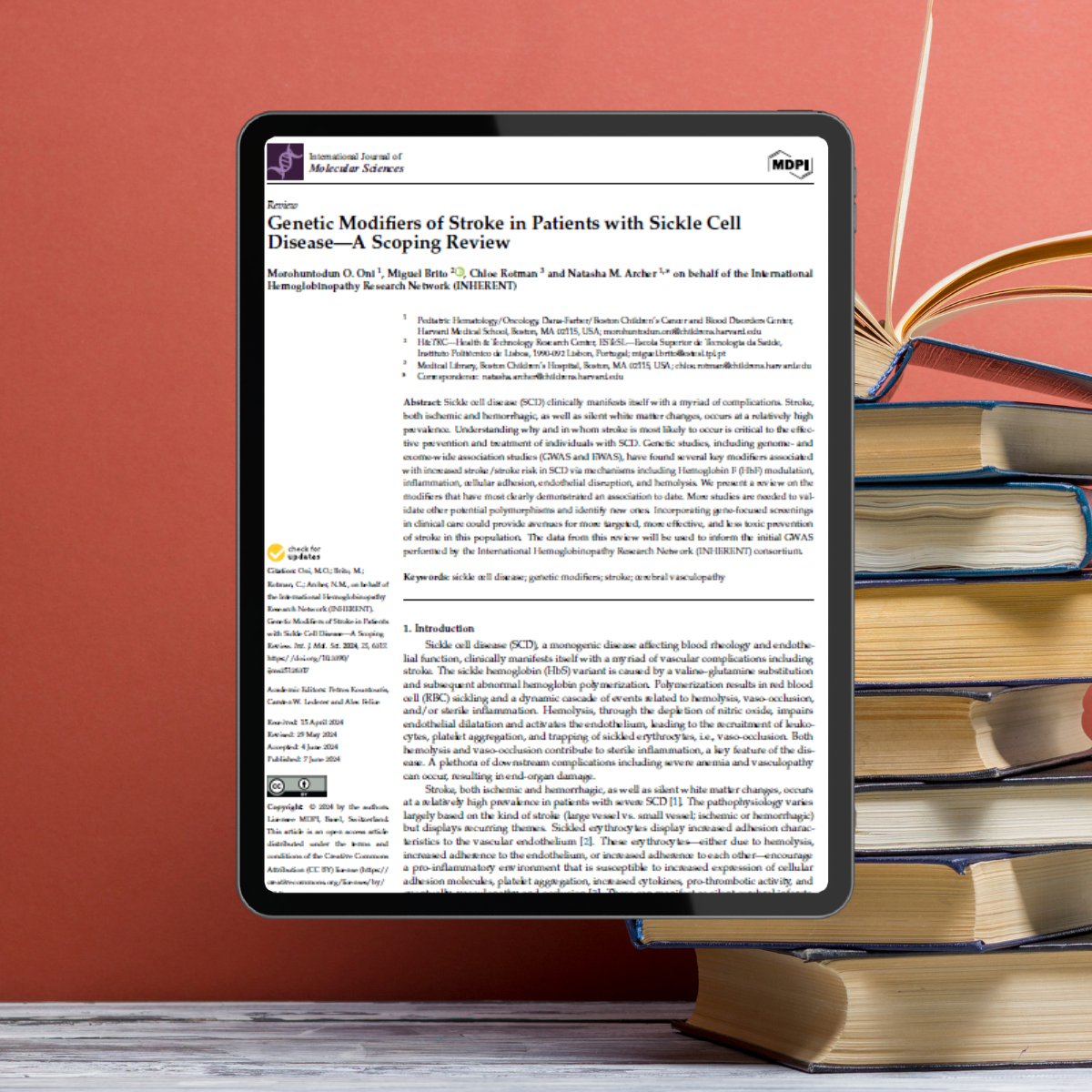
Genetic Modifiers of Stroke in Patients with Sickle Cell Disease – A Scoping Review
This scoping review summarizes published evidence on genetic variants associated with stroke risk in sickle cell disease. It highlights modifier genes and biological pathways involved in vasculopathy, inflammation, coagulation, endothelial dysfunction, and hemolysis, and discusses how genetic information may contribute to improved risk prediction, early identification of high-risk patients, and more personalized prevention strategies for cerebrovascular complications in sickle cell disease.
Oni, M.O., Brito, M., Rotman, C. and Archer, N.M., 2024. Genetic Modifiers of Stroke in Patients with Sickle Cell Disease—A Scoping Review. International Journal of Molecular Sciences, 25(12), p.6317. DOI: 10.3390/ijms25126317
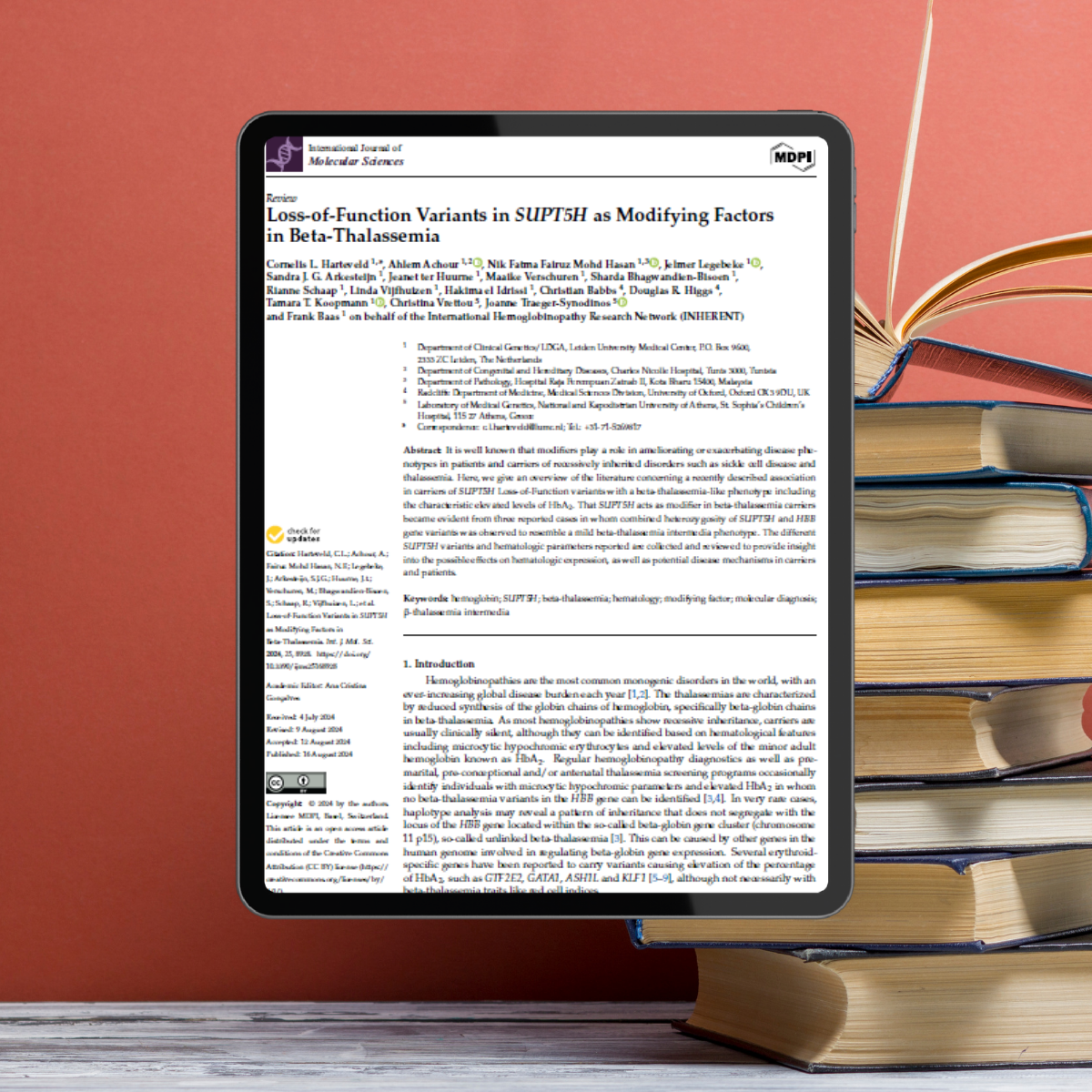
Loss-of-Function Variants in SUPT5H as Modifying Factors in Beta-Thalassemia.
This publication investigates loss-of-function variants in SUPT5H as potential genetic modifiers of β-thalassemia severity. It explores how SUPT5H-related transcriptional regulation may influence globin gene expression and downstream erythropoiesis, highlighting the relevance of rare modifier variants for explaining clinical heterogeneity and supporting improved genotype phenotype interpretation in β-thalassemia.
Harteveld, C.L., Achour, A., Fairuz Mohd Hasan, N.F., Legebeke, J., Arkesteijn, S.J., Huurne, J.T., Verschuren, M., Bhagwandien-Bisoen, S., Schaap, R., Vijfhuizen, L. and Idrissi, H.E., 2024. Loss-of-function variants in SUPT5H as modifying factors in Beta-Thalassemia. International Journal of Molecular Sciences, 25(16), p.8928.
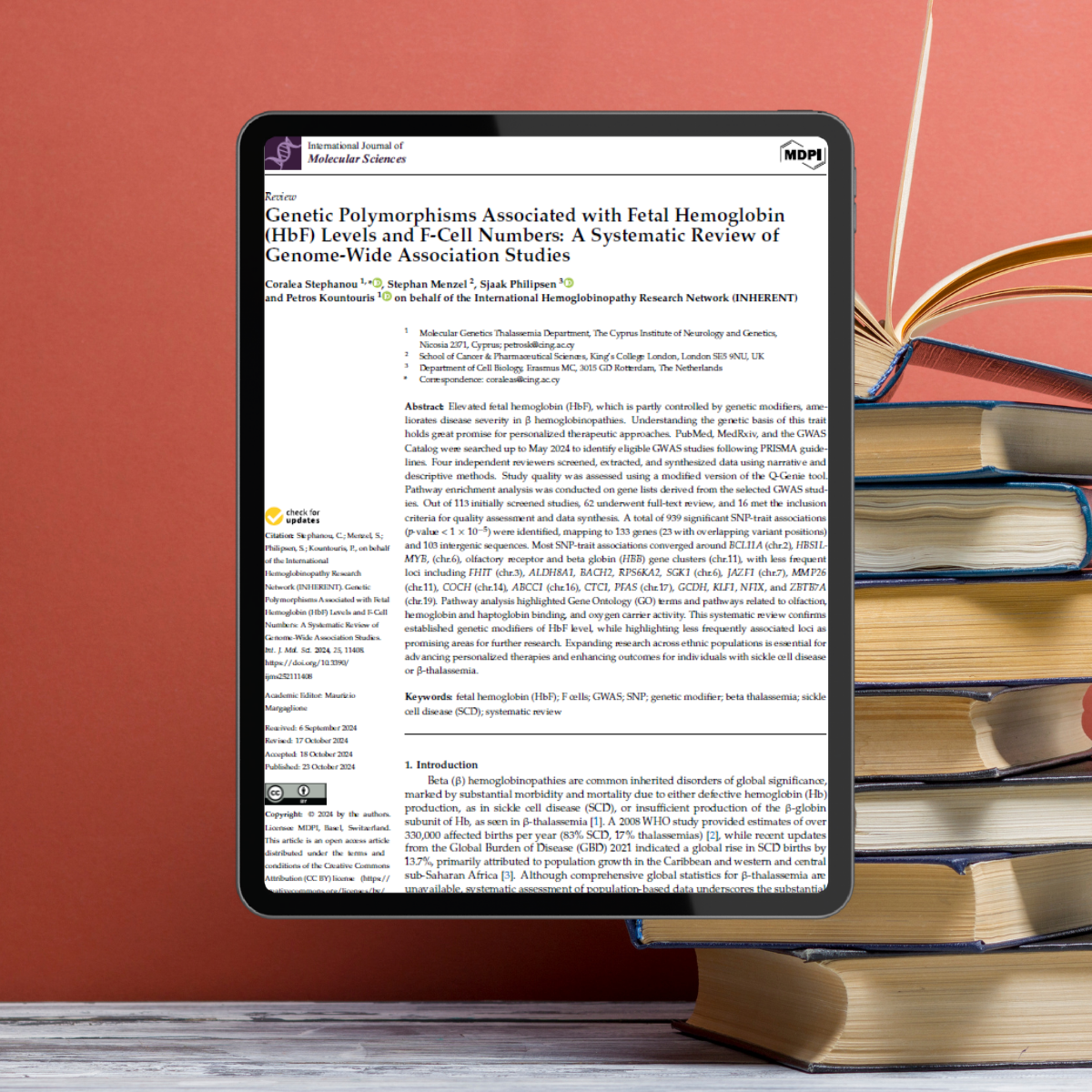
Genetic Polymorphisms Associated with Fetal Hemoglobin (HbF) Levels and F-Cell Numbers: A Systematic Review of Genome-Wide Association Studies.
This systematic review compiles genome-wide association study findings on genetic variants influencing fetal hemoglobin levels and F-cell numbers. It highlights key loci involved in HbF regulation and erythroid biology, and discusses how these genetic determinants contribute to clinical variability in hemoglobinopathies and may support improved prognostic stratification and therapeutic strategies aimed at HbF induction.
Harteveld, C.L., Achour, A., Fairuz Mohd Hasan, N.F., Legebeke, J., Arkesteijn, S.J., Huurne, J.T., Verschuren, M., Bhagwandien-Bisoen, S., Schaap, R., Vijfhuizen, L. and Idrissi, H.E., 2024. Loss-of-function variants in SUPT5H as modifying factors in Beta-Thalassemia. International Journal of Molecular Sciences, 25(16), p.8928.
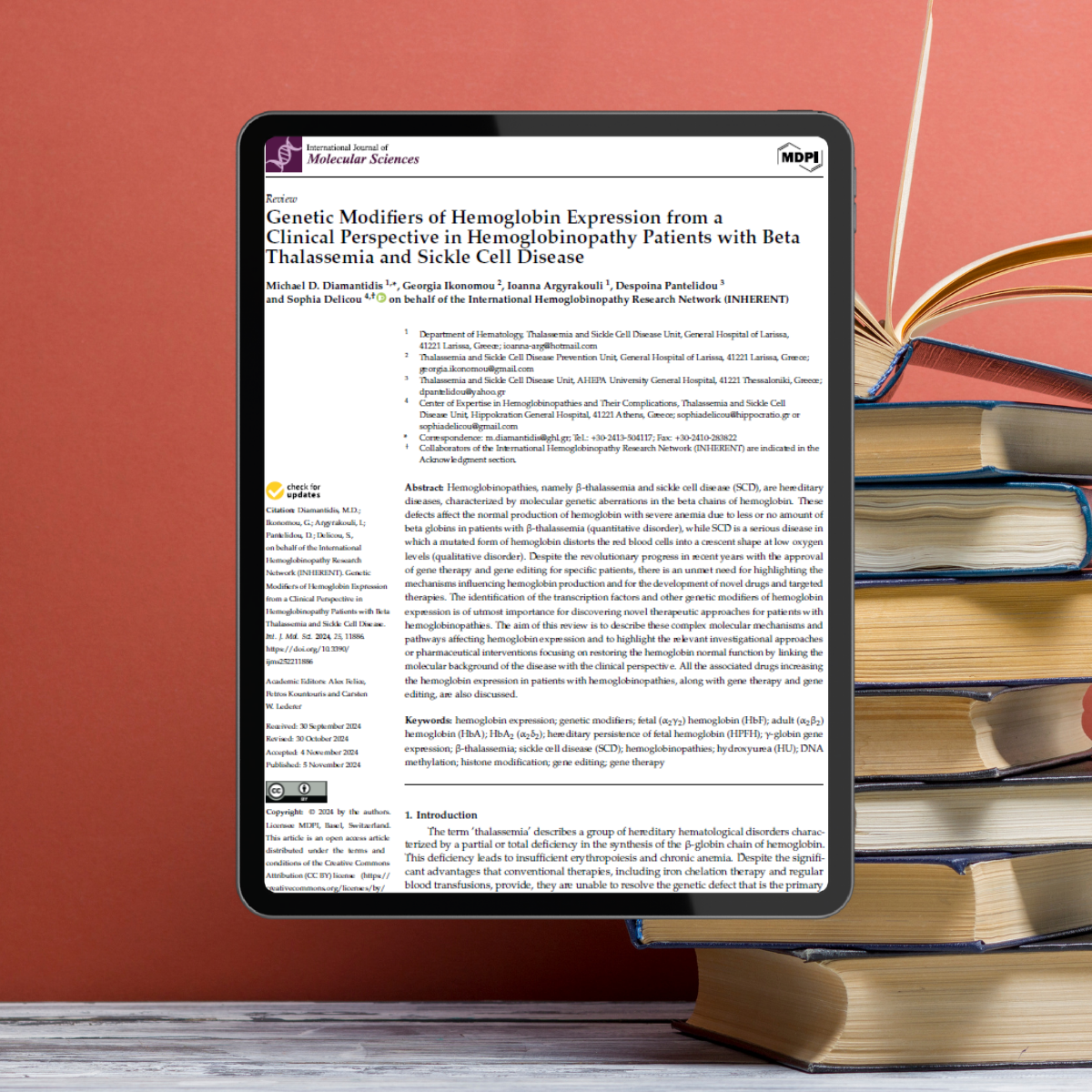
Genetic Modifiers of Hemoglobin Expression from a Clinical Perspective in Hemoglobinopathy Patients with Beta Thalassemia and Sickle Cell Disease.
This review discusses clinically relevant genetic modifiers that influence hemoglobin expression and disease severity in patients with β-thalassemia and sickle cell disease. It highlights major modifier pathways including regulation of fetal hemoglobin, co-inheritance of α-thalassemia, and variants affecting erythropoiesis and globin chain balance, emphasizing how modifier testing can improve diagnosis, prognosis, patient stratification, and personalized clinical management.
Diamantidis, M.D., Ikonomou, G., Argyrakouli, I., Pantelidou, D. and Delicou, S., 2024. Genetic Modifiers of Hemoglobin Expression from a Clinical Perspective in Hemoglobinopathy Patients with Beta Thalassemia and Sickle Cell Disease. International Journal of Molecular Sciences, 25(22), p.11886. DOI: 10.3390/ijms252211886